Introduction
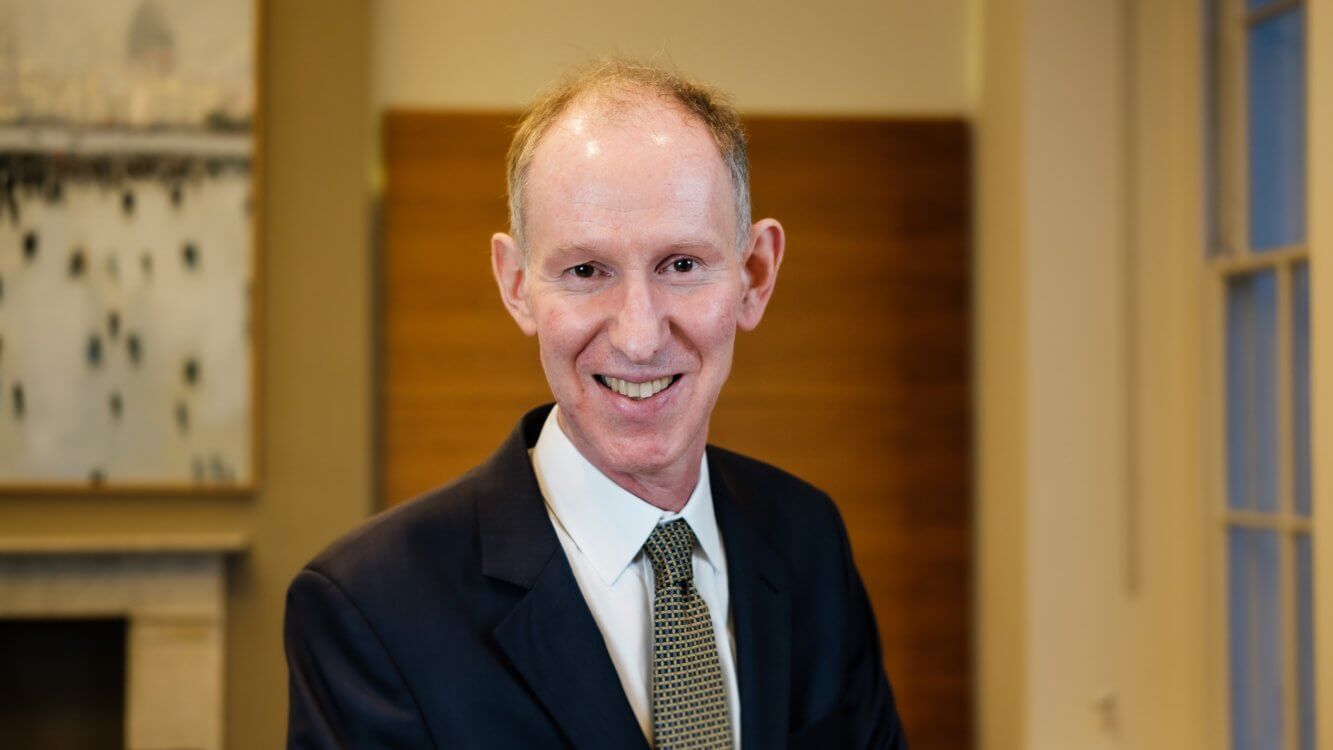
Sir Christopher Vajda KC was the UK judge at the Court of Justice of the EU (CJEU) between 2012 and 2020 (when Brexit occurred).
While a judge at the CJEU he sat on a wide range of cases including in the field of aviation, banking, competition, energy, investor state treaties, pharmaceuticals, sanctions, state aid, and tax. He was President of a three judge Chamber on two occasions. In a speech marking his departure from the CJEU the President of the Court said: “He is an extremely able judge with a keen eye for detail and he has been a highly-valued member of this court for more than seven years. His analysis of complex legal problems is invariably to the point and his outstanding ability to distinguish between matters that are relevant to the specific legal issue that falls to be decided – and those that are not – has been invaluable, given the heavy and increasing workload that we face.” He was subsequently appointed by the President of the CJEU to chair a Conciliation Commission to resolve a dispute within an EU Institution.
Prior to becoming a judge, he had a wide-ranging practice in both public and private law at the English Bar. He acted on numerous occasions for the UK Government, and public bodies such as the Bank of England, the BBC as well as various sectorial regulators, such as Ofcom (telecommunications) and Ofgem (gas and electricity). He also acted for companies and other bodies in fields such as aviation, banking, electricity, gas, sport (in particular cricket, football, and horse racing) tax, telecommunications, tech, transport, and water. He appeared frequently before the CJEU, and all English courts, including the UK Supreme Court and the Court of Appeal. He also appeared before arbitration panels and was appointed to chair an arbitration panel in the Gulf region in a telecommunications dispute.
He was knighted in the New Year’s Honours List 2026. The citation from the Foreign, Commonwealth and Development Office states:
‘Christopher Vajda is recognised for his distinguished career as a barrister, arbitrator, legal academic and international judge. Before 2012, he appeared in around 100 cases before the Court of Justice of the European Union, with more than half representing the UK Government. Appointed as the UK Judge at the Court in 2012, he gave exceptional service, and thereby enhancing the standing of the UK. Following the referendum, he ensured that there was no drop in either the quantity or quality of his judicial output, including leading and delivering judgments on some of the most difficult and sensitive cases to come before the Court during his time. Subsequently, he returned to the UK as a highly sought-after barrister and arbitrator and has continued to contribute to the legal profession through teaching, mentoring, and sponsoring young lawyers across the UK and Europe.’
Arbitrator
He has been appointed to the Panel of Recognised International Market Experts in Finance (P.R.I.M.E), the UK Sports Resolutions panel, the Panel of arbitrators at the Singapore International Arbitration Centre (SIAC) and to the panel of persons suitable for appointment as Chairpersons for Arbitrations to which the EU is a party. He has sat as an arbitrator in ICC, LCIA, SIAC cases as well as in sports, and ad hoc arbitrations. The most recent published awards in cases in which he has sat are The FA Rule K arbitration award on the challenge by football agencies to the fee cap rule introduced by FIFA on football agents’ fees and the challenge by Manchester City to the Associated Party Transaction Rules of the Premier League.
In Chambers UK Bar 2026, he is ranked in Band 2, Silks for International Arbitration: Arbitrators: “Christopher Vajda’s awards are really well reasoned and clear. He runs the arbitration really well.” He has also acted as a mediator in sporting disputes.
He is a visiting professor at the College of Europe in Bruges (where he gives a course on arbitration and EU law) as well as at King’s College, London, and at the University of Luxembourg where he teaches EU private international law. He has been awarded an honorary doctorate from the Károli Gáspár University of the Reformed Church in Budapest where he also lectures on arbitration. He is the Vice Chair of the London Branch of the Chartered Institute of Arbitrators.
He is fluent in French (the working language of the CJEU) and speaks German.